

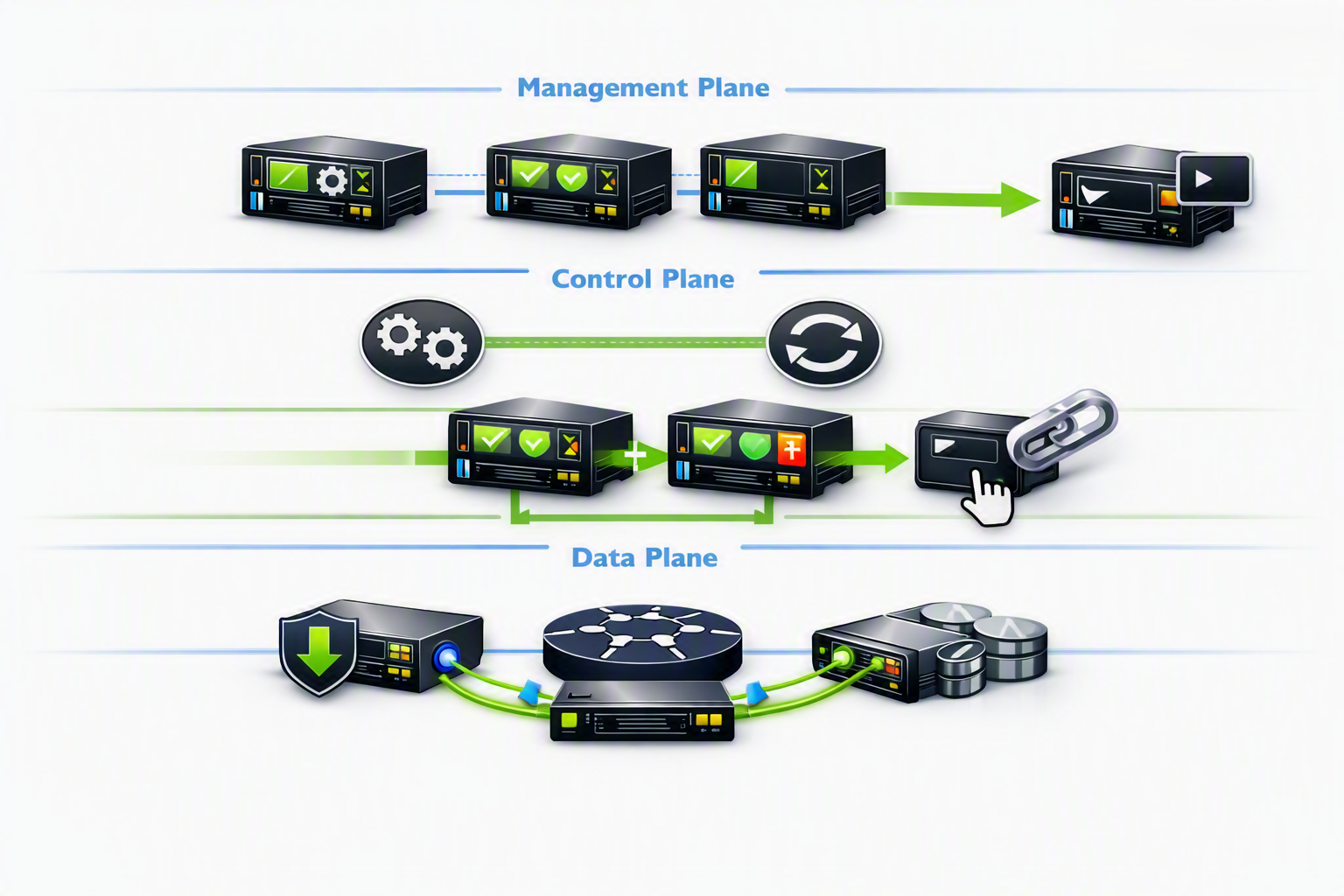
Join an NSX Manager Appliance Manually is an article that explains how to join an NSX Manager Appliance manually into an NSX Manager Cluster.
Joining an NSX Manager Appliance manually is a useful procedure for specific deployment scenarios where an appliance needs to be added to an existing NSX Manager Cluster outside the standard UI workflow. This article explains how to perform this process using CLI commands.
Normally, additional NSX Manager Appliances can be added through the NSX Manager user interface. However, when an appliance is deployed separately, such as on a standalone ESXi host, a manual join operation may be required to integrate it into the existing cluster.
Firstly, if you need to know all steps to deploy the first NSX Manager Appliance, we have an article that shows how to do it:
Also, after the deployment of the first NSX Manager Appliance, to add an additional one, there is a process to achieve it. We have an article to explain it too:
But, if there is a process to add additional NSX Manager Appliances from NSX Manager UI, Why do I need to join or add manually an NSX Manager Appliance?
We aim to answer this question with this article 🙂
If you did a deployment of the NSX Manager Appliance under a StandAlone ESXi host, you can join it to an existing NSX Manager Cluster. It is our case in this lab environment. We did a deployment of an NSX Manager Appliance in a StandAlone host and we want to add it to an existing NSX Manager Cluster.
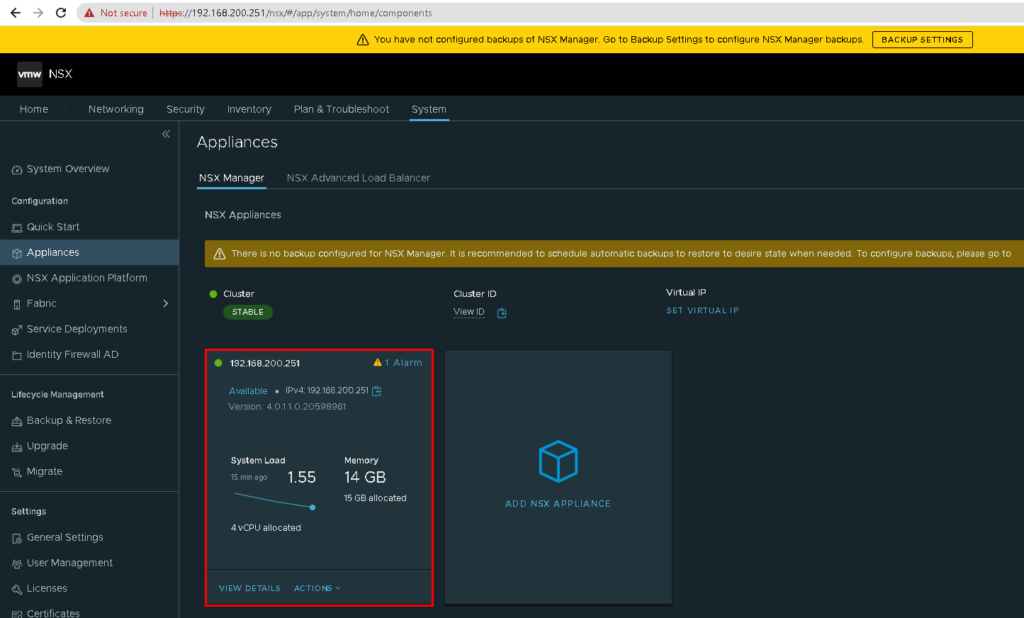
The picture below shows that we have only one NSX Manager Appliance in our NSX Manager Cluster:
Below, we are describing all the steps to do it:
1- Firstly, on the current NSX Manager Appliance, we need to collect the Cluster ID:
nsxm-01> get cluster config | find Id:
Fri Jun 16 2023 UTC 10:53:34.582
Cluster Id: b7256416-2d9c-4b07-a9d0-ac19bc223975
In this example, the cluster-ID is b7256416-2d9c-4b07-a9d0-ac19bc223975
2- Secondly, collect the certificate API thumbprint:
nsxm-01> get certificate api thumbprint
Fri Jun 16 2023 UTC 10:53:56.095
a94d9df92c5aaef9c9595f61bc3e86bf4ee7e36375e19cc9fb42537310183ff8
In this example, the certificate API thumbprint is a94d9df92c5aaef9c9595f61bc3e86bf4ee7e36375e19cc9fb42537310183ff8
3- Now, we need to join the new NSX Manager Appliance in the existing NSX Manager Cluster. Command syntax:
join <existing_manager_node_ip> cluster-id <cluster_id> thumbprint <api_thumbprint> username adminIn our example, the below command is being used to join the new NSX Manager Appliance:
join 192.168.200.251 cluster-id b7256416-2d9c-4b07-a9d0-ac19bc223975 thumbprint a94d9df92c5aaef9c9595f61bc3e86bf4ee7e36375e19cc9fb42537310183ff8 username adminWhere:
192.168.200.251 –> IP address of the current NSX Manager Appliance
We need to receive a message like this:
nsxm-02> join 192.168.200.251 cluster-id b7256416-2d9c-4b07-a9d0-ac19bc223975 thumbprint a94d9df92c5aaef9c9595f61bc3e86bf4ee7e36375e19cc9fb42537310183ff8 username admin
Data on this node will be lost. Are you sure? (yes/no): yes
Password for API user:
Join operation successfully. Services are being restarted. Cluster may take some time to stabilize.
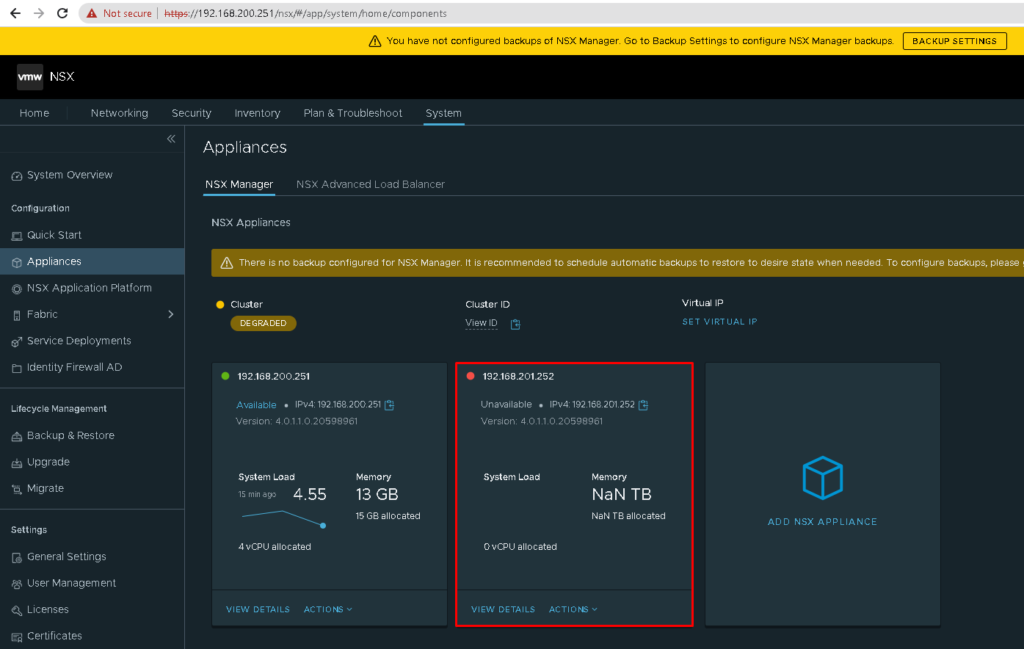
4- On the NSX Manager UI, we can see the new NSX Manager Appliance. So, we need to wait some minutes for the cluster to stabilize:
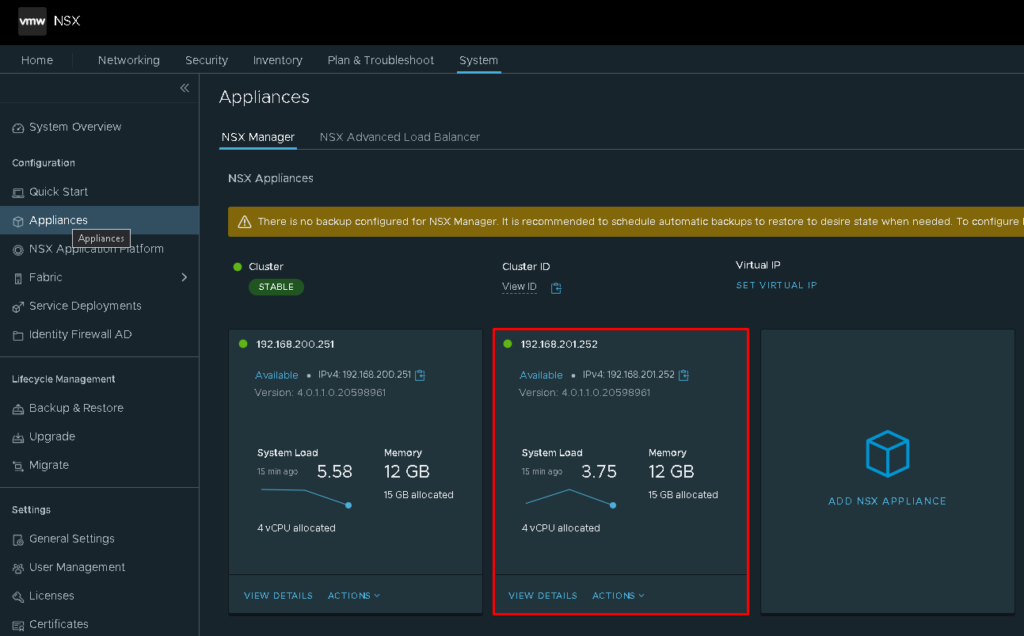
So, after some minutes, the cluster status will be “STABLE” as we show in the below picture:
IMPORTANT: If the new NSX Manager Appliance does not have communication with the current NSX Manager Appliance, the below error can happen during the joining process:
nsxm-02> join 192.168.200.251 cluster-id b7256416-2d9c-4b07-a9d0-ac19bc223975 thumbprint a94d9df92c5aaef9c9595f61bc3e86bf4ee7e36375e19cc9fb42537310183ff8 username admin
Data on this node will be lost. Are you sure? (yes/no): yes
Password for API user:
Fri Jun 16 2023 UTC 10:57:22.732
% An error occurred while joining the specified cluster. Reason: [CBM183] Received an error message from the target node. ErrorMessage: Unable to execute HTTP request: POST https://192.168.200.251:443/api/v1/cluster-manager/nodes?action=attach_cluster_node HTTP/1.1