

Close Menu
DPC Virtual Tips
    Read More

    How to Troubleshoot Packet Drops on an ESXi Host

    August 16, 2026

    SlurmDBD Is Down: What Continues Working and What Does Not

    August 15, 2026

    How to Investigate Jobs Stuck in COMPLETING State on Slurm

    August 14, 2026
    • Home
    • About Us
    • Contact
    • Cookie Policy
    • Comment Policy
    • Privacy Policy
    • Terms of Use
    • Disclaimer
    Tuesday, August 25
    DPC Virtual Tips
    • Home
    • Operating Systems
    • PowerFlex
    • HPC
    • Virtualization
    • About the Author
    • About Us
    • Contact
    DPC Virtual Tips
    Home » Net Acropolis Command-Line Interface (aCLI) Overview
    Virtualization

    Net Acropolis Command-Line Interface (aCLI) Overview

    DaniloBy DaniloNovember 25, 2024Updated:July 31, 2026No Comments3 Mins Read
    Facebook Twitter Pinterest LinkedIn Tumblr Email
    Nutanix net aCLI
    Share
    Facebook Twitter LinkedIn Pinterest Email

    The Net Acropolis Command-Line Interface (aCLI) Overview is an article that demonstrates some useful commands for managing Network components in a Nutanix Cluster.

    Acropolis provides a command-line interface for managing hosts, networks, snapshots, and VMs. This article will show specific commands to manage Network components.

    Accessing the Acropolis CLI: connect via SSH to any Controller VM (CVM) and run “acli” at the shell prompt. The prompt switches to Acropolis (aCLI) mode for interactive operations.

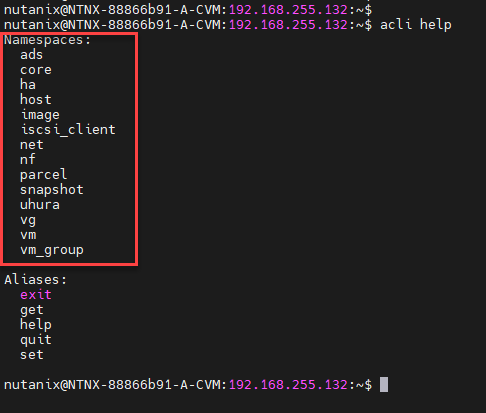
    To exit aCLI, type “exit”. aCLI organizes functionality into namespaces (cluster properties/functions). List available namespaces with “acli help”. For detailed reference of each namespace, see:

    • https://portal.nutanix.com/page/documents/details?targetId=Command-Ref-AOS-v6_10:Command-Ref-AOS-v6_10

    First and foremost, How can I access the Acropolis Command Line?

    To access the Acropolis CLI, log on to a Controller VM (CVM). You can choose to log in to any controller VM.

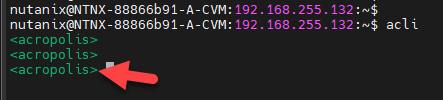
    Access it by SSH and type “acli” at the shell command line. You will notice that the command line will be changed to “acropolis” mode, as we can see in the following picture:
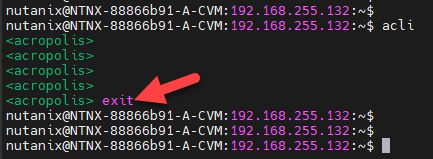
    To exit the “acli” mode, type “exit”:
    In the “acli” command, there are several “namespaces”. We can understand the “namespaces” as cluster properties or functions to explore. To see all available namespace, we can type “acli help,” as we can see in the following picture:
    To get details of each namespace, we highly recommend to the check the following documentation:

    https://portal.nutanix.com/page/documents/details?targetId=Command-Ref-AOS-v6_10:Command-Ref-AOS-v6_10

    Note: This article will show some namespaces with examples. To check the full namespaces and their operations, access the above link!

    acli net

    In the namespace “net,” there are essential operations related to the network configuration.

    To list all subnets, type the following command (subnets are used to associate with Virtual Machines – it is like a Port Group in VMware environments):

    acli net.list

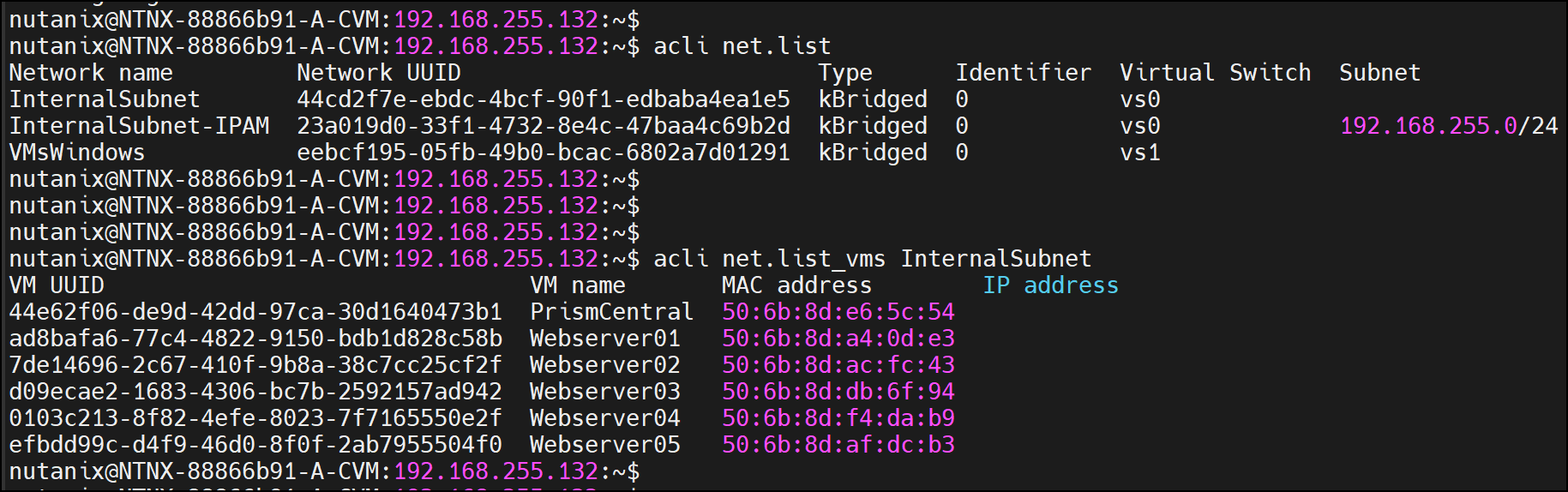
    In this case, for instance, we have three subnets. The “Network name” is the subnet name. “Virtual Switch” is the virtual switch used by the subnet. When we have the “Subnet” field filled, it means that IP Address Management (IPAM) is enabled on the specific subnet:

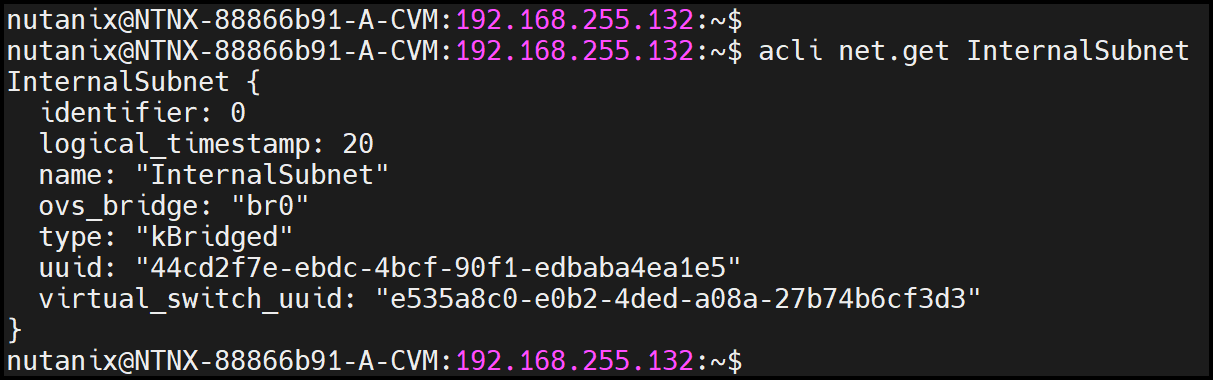
    To get details for a specific subnet:

    acli net.get InternalSubnet
    To list all virtual machines (VMs) that are using a specific network/subnet:

    acli net.list_vms InternalSubnet

    In this example, we are listing all VMs that are using the subnet “InternalSubnet”:
    To list all virtual switches (VS):

    acli net.list_virtual_switch

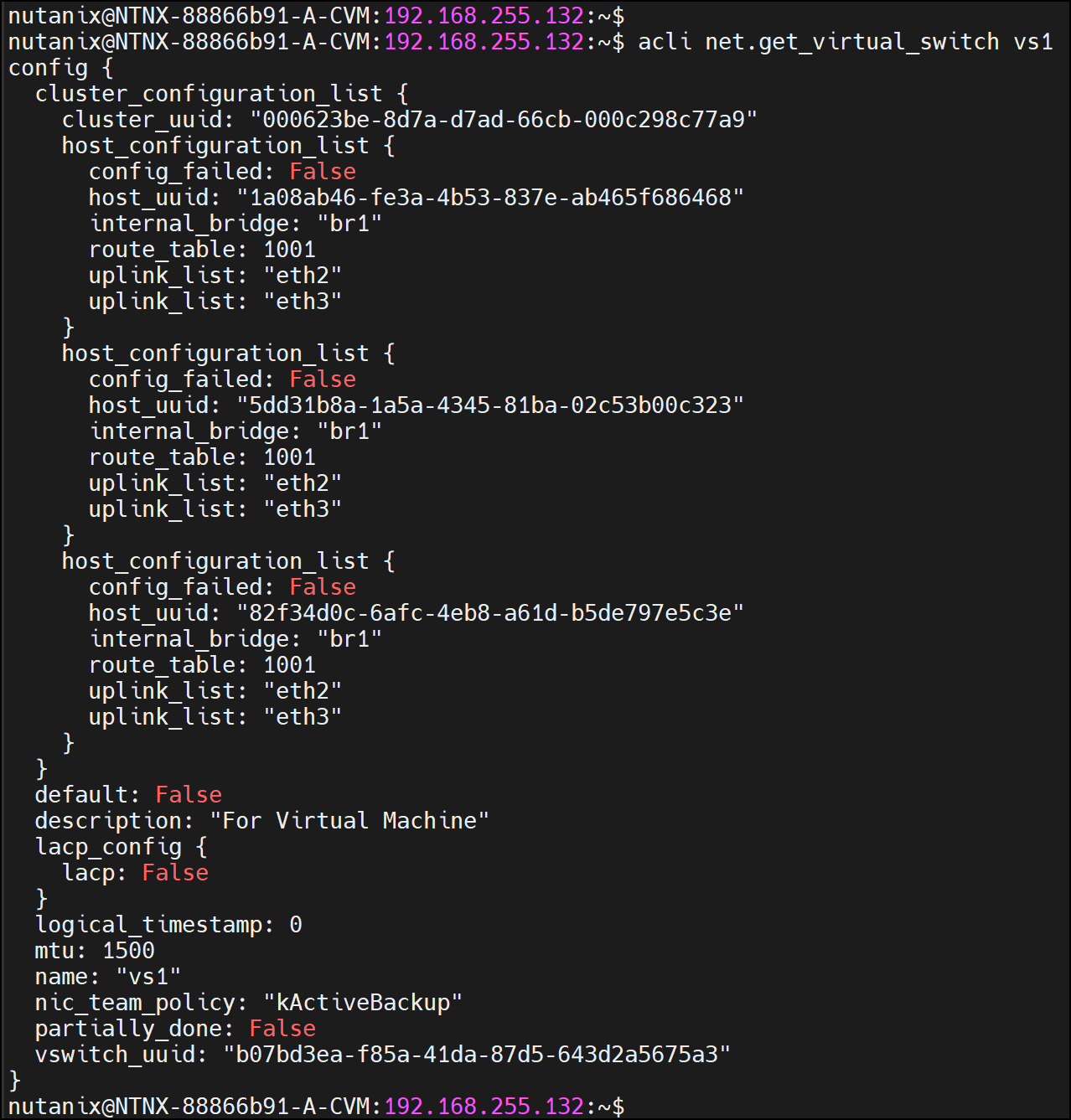
    To get details for a specific virtual switch (in this case, vs1):

    acli net.get_virtual_switch vs1

    As we can see in the following picture, there are essential details about the virtual switch 1 (vs1). We can see the bridge name (br1), uplink interfaces (eth2 and eth3), and the nic team policy (ActiveBackup) for both uplinks:
    To Wrapping This Up

    So, the Acropolis Command Line is an essential tool that all Nutanix administrators must know. As we told us before, several “acli” namespaces exist beyond the “net” namespace. As we have been writing this article, we have been using the following link (you can check more operations from the “net” namespace and other namespaces):

    https://portal.nutanix.com/page/documents/details?targetId=Command-Ref-AOS-v6_5:acl-acli-net-auto-r.html

    Share. Facebook Twitter Pinterest LinkedIn Tumblr Email
    Previous ArticleSharing a Nutanix Volume Group with Windows
    Next Article Nutanix Command Line Interface (nCLI) Overview
    Danilo

    Infrastructure Engineer with experience in Virtualization, Linux, Windows Server and learning automation using Python. DPC Virtual Tips was created to share practical tutorials, lab experiences and troubleshooting guides focused on enterprise infrastructure technologies.

    Related Posts

    How to Troubleshoot Packet Drops on an ESXi Host

    August 16, 2026

    VM Replication with vSphere Replication and Site Recovery Manager

    June 16, 2025

    Changing DNS Settings on ESXi Hosts

    May 20, 2025

    Comments are closed.

    Search
    Categories
    • HPC (12)
    • Operating Systems (85)
    • PowerFlex (22)
    • Virtualization (130)
    Read More
    Virtualization

    How to Troubleshoot Packet Drops on an ESXi Host

    By DaniloAugust 16, 20260
    HPC

    SlurmDBD Is Down: What Continues Working and What Does Not

    By DaniloAugust 15, 20260
    HPC

    How to Investigate Jobs Stuck in COMPLETING State on Slurm

    By DaniloAugust 14, 20260
    Operating Systems

    Linux Server Has Free Memory but Is Swapping: Why?

    By DaniloAugust 13, 20260
    Operating Systems

    How to Determine Whether Packet Loss Is Local or Network Related on Linux

    By DaniloAugust 12, 20260
    Latest Posts

    How to Troubleshoot Packet Drops on an ESXi Host

    August 16, 2026

    SlurmDBD Is Down: What Continues Working and What Does Not

    August 15, 2026

    How to Investigate Jobs Stuck in COMPLETING State on Slurm

    August 14, 2026
    Images from Gallery
    hpc main commands
    linux commands
    install rock linux
    lustre fs
    shell scripting
    vSAN Trace Files
    Categories
    • HPC
    • Operating Systems
    • PowerFlex
    • Virtualization
    • Home
    • About Us
    • Contact
    • Cookie Policy
    • Comment Policy
    • Privacy Policy
    • Terms of Use
    • Disclaimer
    Copyright © 2026, DPC Virtual Tips. All rights reserved.

    Type above and press Enter to search. Press Esc to cancel.

    We use cookies to ensure your best experience on our website. If you continue using our website, we'll assume you agree to our cookie policy